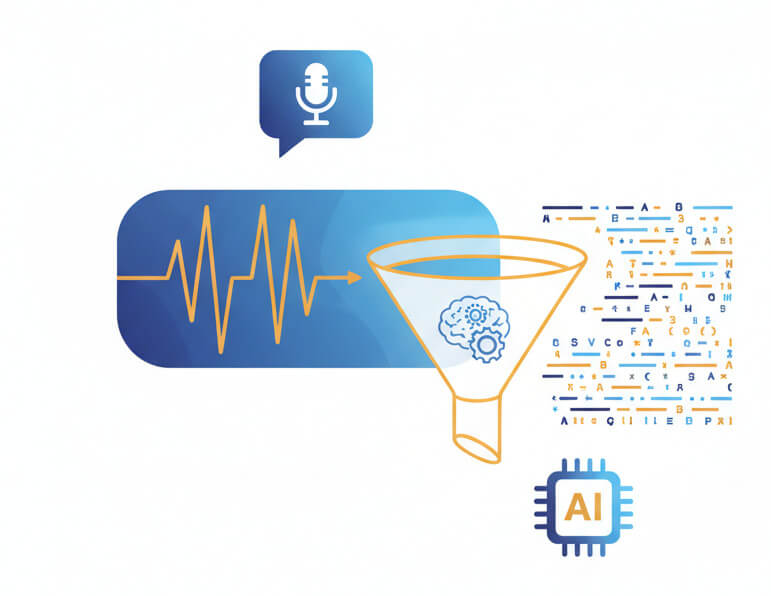
Convert raw audio transport streams into text documents with speaker labels and flexible output formats
Transcribe ADTS streams in over 50 languages with native-level recognition trained on diverse dialects

Files remain private on EU-based infrastructure with encryption at rest and in transit
Each sentence receives precise time codes for synchronization with source audio
Download finished transcripts as editable documents, spreadsheets, or subtitle tracks
Upload, Process, and Download Text in Minutes
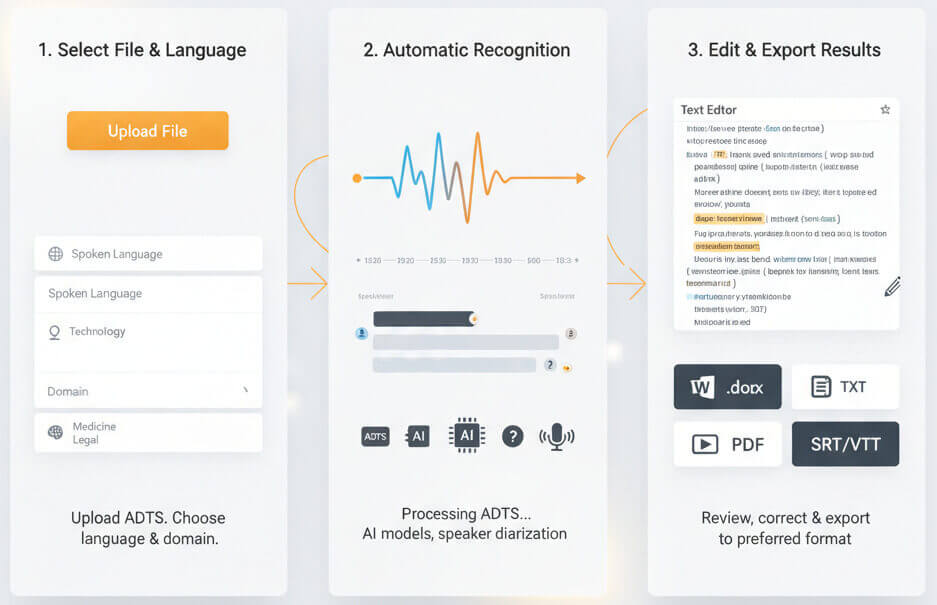
Upload the ADTS stream directly from a device or cloud storage. Pick the spoken language and any specialized vocabulary domain such as technology, medicine, or legal terminology. Domain selection improves recognition of technical terms.
The system decodes the ADTS container, extracts audio frames, and applies deep-learning speech models trained on broadcast and streaming data. Speaker diarization separates voices, and punctuation is restored automatically for readability.
Review the completed transcript in the built-in editor, which highlights keywords and allows inline corrections. Export the final version to Microsoft Word, plain text, PDF for reports, or SRT and VTT for video captioning workflows.
ADTS files carry audio transport stream data widely used in digital broadcasting and live-streaming applications
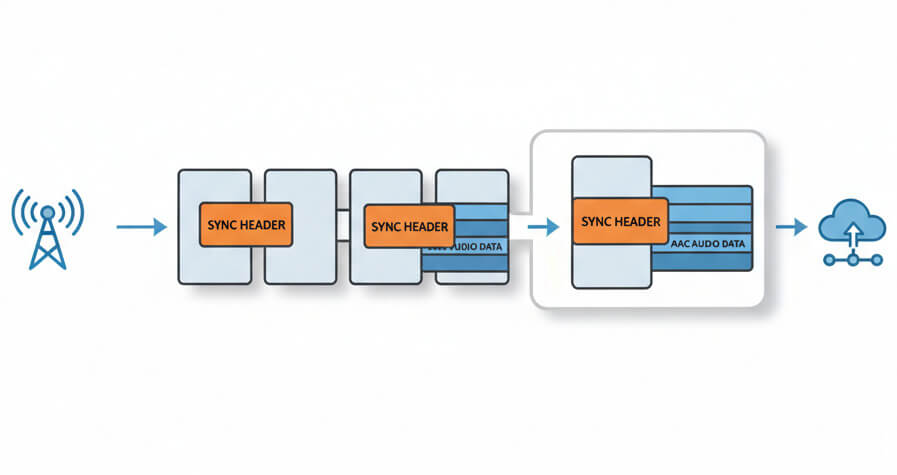
ADTS stands for Audio Data Transport Stream. It wraps AAC-encoded audio frames inside a packetized structure designed for broadcast transmission and network streaming. Each frame includes synchronization headers, making the stream robust against packet loss and easy to parse by decoders.
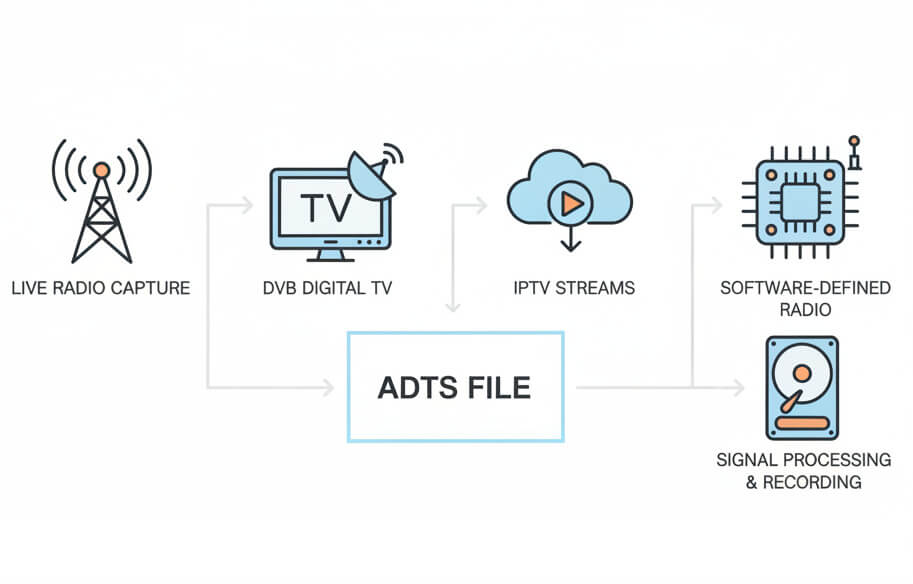
ADTS files often originate from live radio capture, DVB digital television recordings, IPTV streams, or software-defined radio tools. Broadcasters and streaming platforms use ADTS during signal processing, and embedded systems export ADTS when capturing live commentary or announcements.
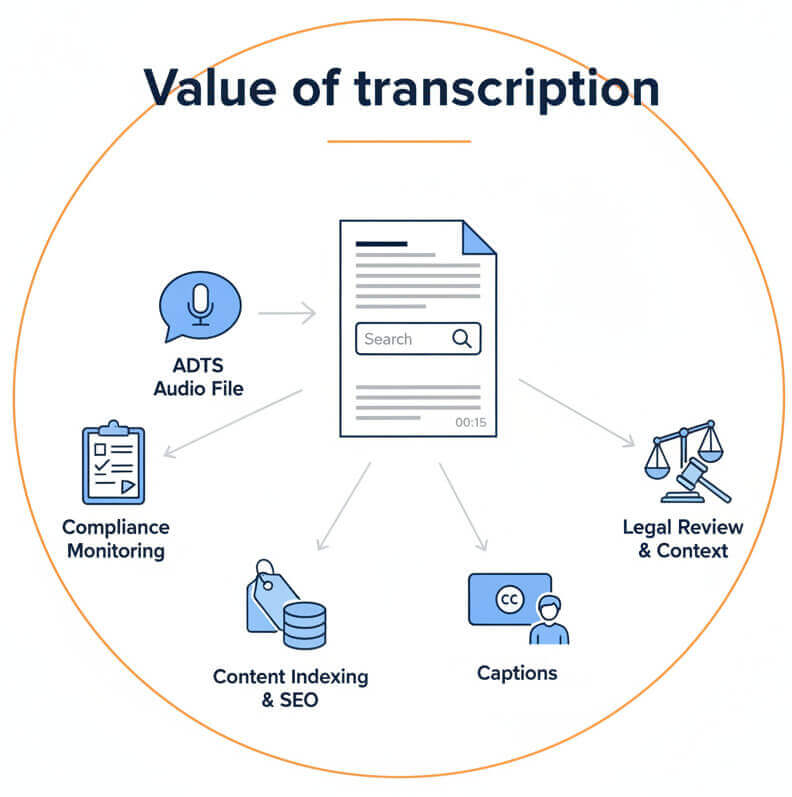
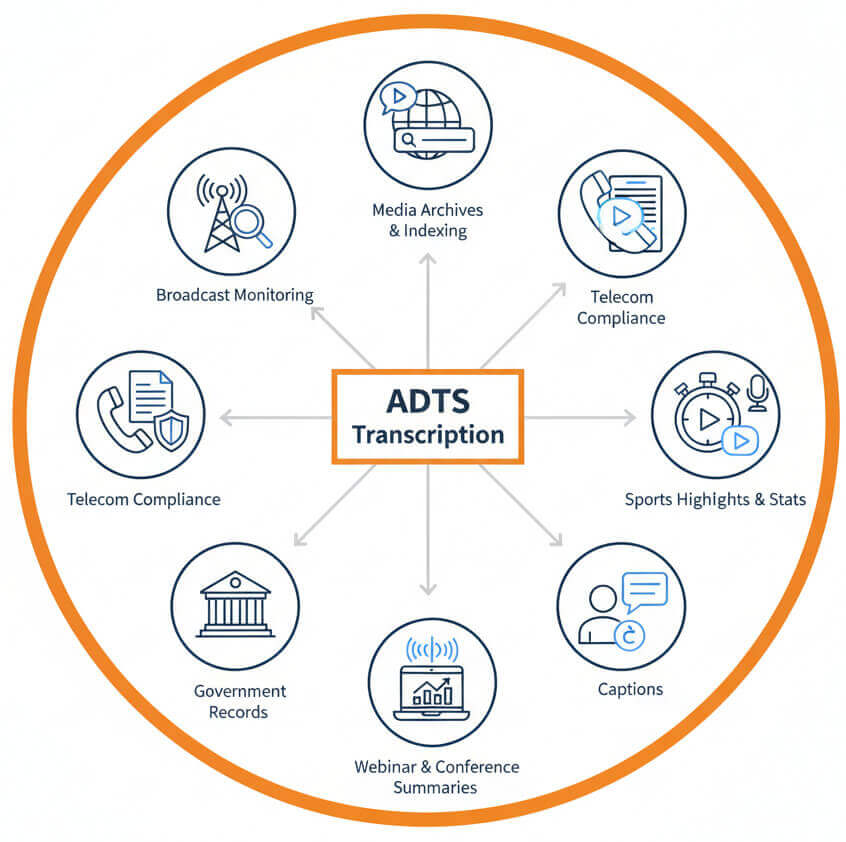
Converting ADTS to text unlocks broadcast archives for search and analysis. Transcripts enable compliance monitoring, content indexing, keyword extraction, and accessibility requirements. Journalists can locate exact quotes, producers can repurpose segments, and legal teams can review spoken statements with full context and timestamps.
Industries and teams using ADTS-to-text workflows for content discovery, compliance, and production efficiency
Yes. Upload any ADTS file through the web interface, select language and domain settings, then start the transcription. All processing happens server-side, so no local software or plugins are required.
A trial account is available with credit to transcribe ADTS files at no cost. This allows testing of speaker labels, timestamps, and export options before committing to a paid plan.
Completed transcripts can be downloaded as Microsoft Word documents, PDFs, plain-text files, Excel spreadsheets for analysis, or SubRip and WebVTT subtitle formats for video editing and captioning pipelines.
Speaker diarization automatically detects voice changes and labels each segment by speaker. The transcript groups utterances by participant, making dialogue and interview recordings easier to follow and attribute.
All uploads and transcripts are processed on servers located in the European Union. Data is encrypted during transfer and storage, and no third-party services outside the EU receive access to audio or text content.